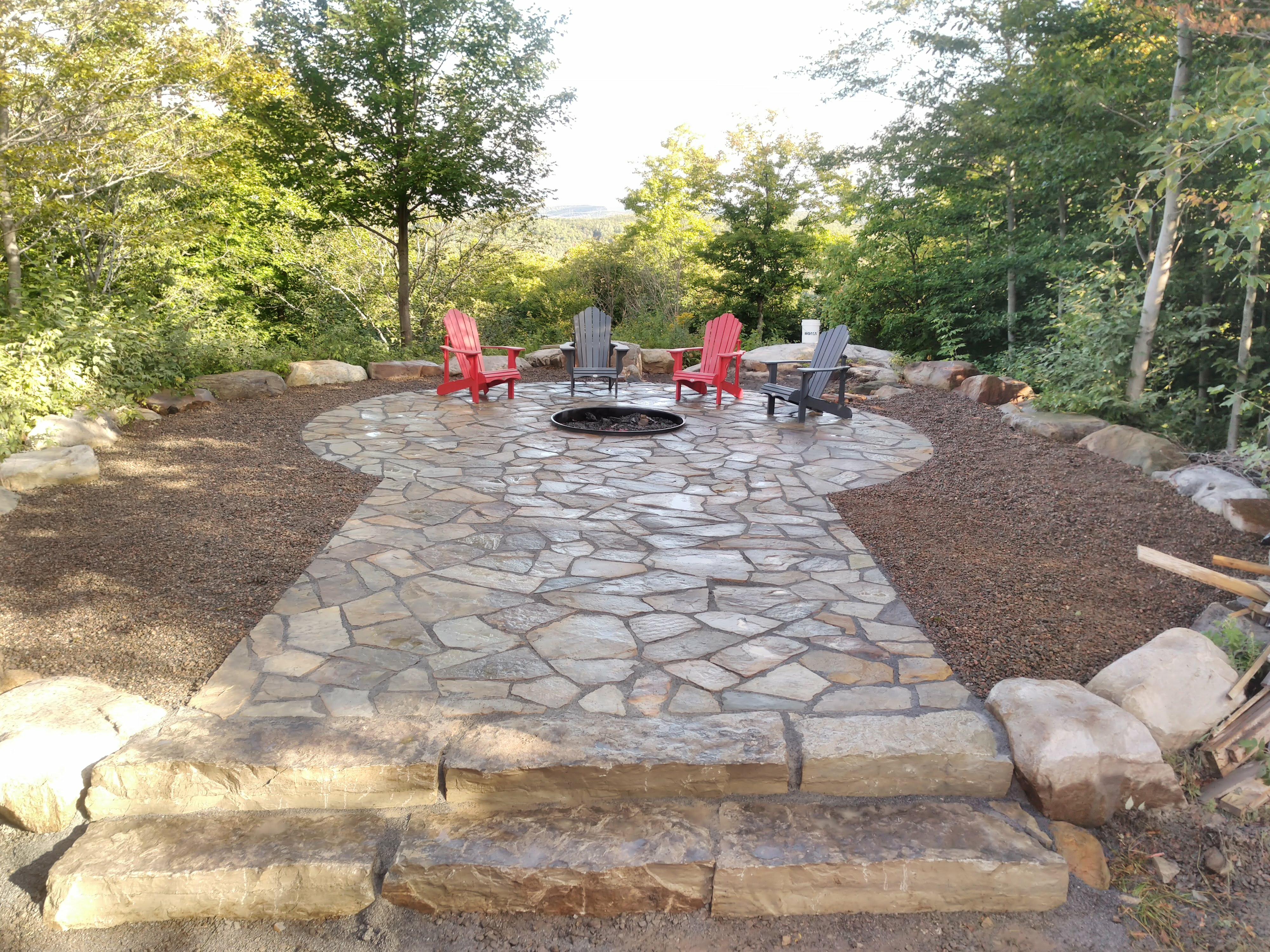
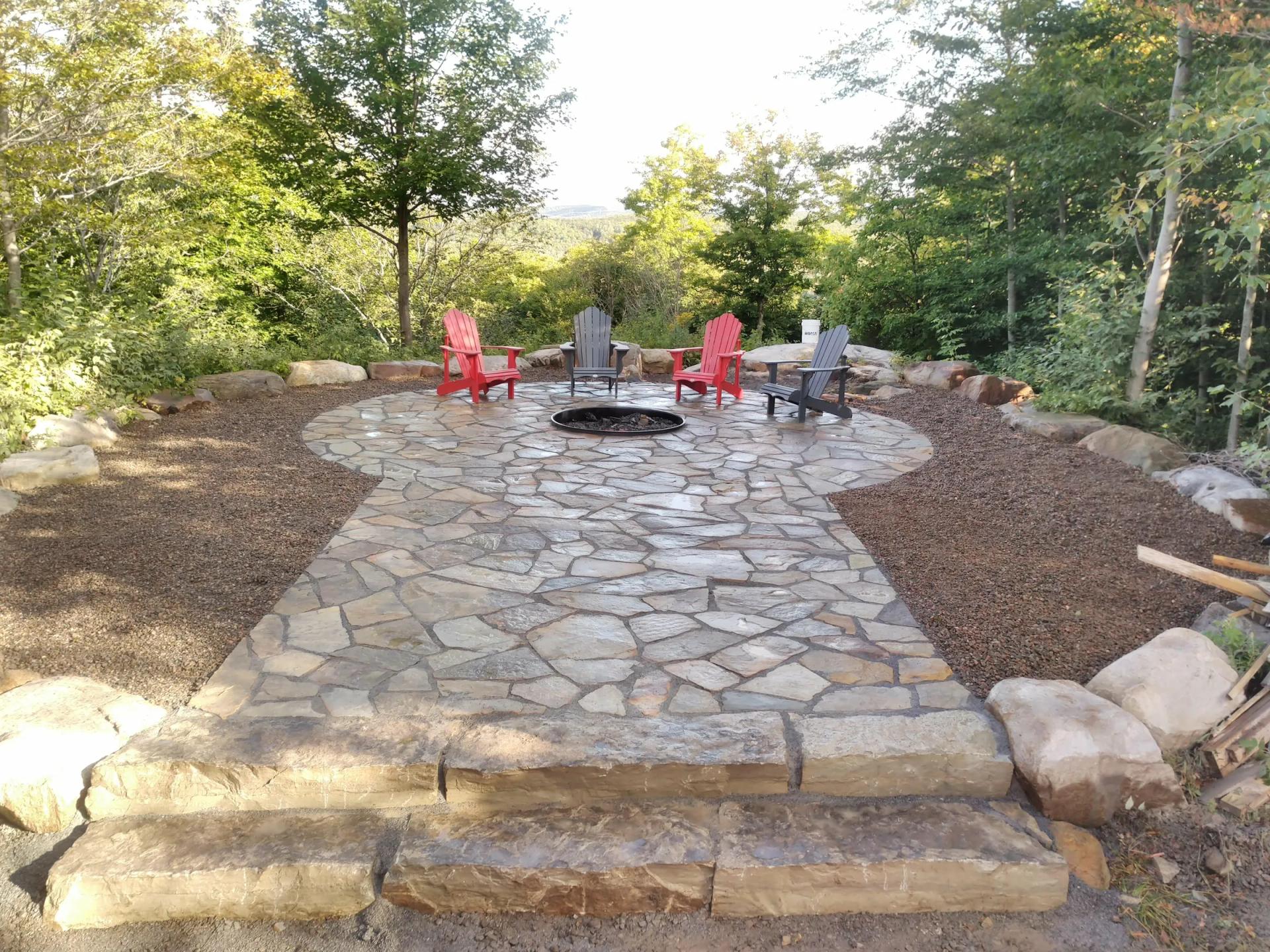
Large natural stone steps and a border of raw boulders around a terrace, built by Les Aménagements Spectaculaire
Guide: choosing the stone

Choosing Natural Stone for a Garden Wall

Limestone, granite, fieldstone or sandstone: the criteria that matter when picking the stone for your wall, before construction comes into it. Free on-site estimate.

In brief

  • What this page is for: Helping you choose the natural stone for your wall. For the construction itself (foundation, drainage, permits), see our Stone walls page.
  • The criteria: The look you want, how it handles Québec freeze-thaw, the wall's role (decorative or retaining) and budget.
  • Stones compared: Saint-Marc limestone, Canadian Shield granite, fieldstone, Mirabel sandstone and slate.

Before you build a wall: which stone?

Two walls can have exactly the same height and foundation and still look nothing alike: it all starts with the stone. This page doesn't cover how a wall is built (that's the job of our stone walls page). It's here to help you choose the stone before the project starts.

The four criteria that matter

Look: a regular grey stone, warm irregular tones, a near-black shade. Freeze-thaw performance: dense limestone, granite, stabilized sandstone and local fieldstone handle repeated cycles well; we avoid very soft sandstone, polished marble and some imported slates that delaminate. The wall's role: a decorative wall frames a planting bed, while a retaining wall holds back soil and demands more rigour (see our retaining walls page). Budget: natural stone isn't always the right call.

Natural stone or precast block?

Natural stone offers unique character, irregular formats full of personality and exceptional lifespan. Precast block gives regular lines, faster installation and manufacturer warranties, which can suit a long wall. We build both: we lay out each option with its pros and cons, without pushing one over the other.

One stone, then the installation

Once the stone is chosen, it is laid by hand, dry-stacked or mortared, with drainage behind the wall. If you're still torn between stones, our natural stone page shows everything we lay, and our page on fieldstone goes deeper on the most rustic option.
The stones compared

Five natural stones for a wall

Saint-Marc limestone

Grey stone quarried near Saint-Marc-des-Carrières, with a natural or split surface. Often chosen for retaining walls, steps and edging; good freeze-thaw resistance and an elegant patina over time.

Canadian Shield granite

Granite of exceptional density, from light grey to deep black. The choice for maximum durability, also used for terraces, outdoor fireplaces and decorative ponds.

Fieldstone

Raw stone in tones of ochre, grey and brown, every piece unique. For a rustic wall that blends into the landscape, notably around a chalet.

Mirabel sandstone

Fine-grain stone in warm beige-pink, quarried locally. Good value for decorative residential walls and cladding visible foundation walls.

Slate and schist

Layered stone split by hand, from grey to black. Better suited to decorative cladding than to the body of a wall.

How we advise you

Stone picked at the quarry

For every natural stone project we visit the quarry to pick the blocks. You validate the key pieces on photos before cutting.

Advice without a bias

Natural stone or block, limestone or sandstone: we lay out the options with their pros and cons based on style, the wall's role and budget.

Height and permit checked

Under 1.2 m, most municipalities require no permit. Above that, a permit and sometimes an engineer's plan are required: we check your municipality's bylaw before work begins.

Hand-laid, 5-year warranty

Our own team lays the stone, no subcontracting, with a 5-year workmanship warranty and a free annual inspection in year one.

Choosing stone for a wall: frequently asked questions

What is the best natural stone for a garden wall?

There is no single best stone: it depends on the look you want and the wall's role. Saint-Marc limestone is often chosen for retaining walls, granite for durability, fieldstone for a rustic look and Mirabel sandstone for a decorative wall with good value.

Natural stone or precast block for a wall?

Natural stone offers unique character and exceptional lifespan. Block gives regular lines, faster installation and manufacturer warranties. The choice depends on style, the wall's role and budget; we present both with their pros and cons.

Which stones should I avoid for a wall in Québec?

Very soft sandstone, polished marble and some imported slates, which delaminate with freeze-thaw. Dense limestone, granite, stabilized sandstone and local fieldstone handle repeated cycles well.

Is a natural stone wall dry-stacked or mortared?

Both exist: dry-stacked or mortared depending on the wall and the style wanted. Either way, drainage behind the wall is essential to withstand frost.

How much does a natural stone wall cost?

Cost depends on the wall's height and length, the stone chosen, the foundation and drainage required, site access and finish. Rather than a generic price, we quote your exact property during a free on-site estimate.

Torn between two stones for your wall? We come out, go over the options with you, then give you a free detailed quote.

See also: Stone walls · Retaining walls · Fieldstone · Natural stone