Earthworks & Land Grading in the Lower Laurentians
Earthworks & grading

Earthworks & Land Grading in the Lower Laurentians

The invisible step that determines how long everything else lasts: excavation, levelling a new lot or regrading an existing one, and managing excess soil. Free estimate with on-site visit.

In brief

  • Service area: Saint-Joseph-du-Lac, Deux-Montagnes, Oka, Saint-Eustache, Mirabel, Pointe-Calumet and the entire MRC de Deux-Montagnes.
  • Two distinct cases: Levelling a new lot (recent construction, soil left raw) and regrading an existing lot (after demolition, or to correct a slope toward the house) are not handled the same way.
  • The question everyone forgets: Where does the excess soil go? Well-planned earthworks balance cut and fill on site when possible, and plan for hauling away the surplus.

Earthworks: the invisible step that determines how long your landscaping lasts

Earthworks is all the ground work that prepares a lot before landscaping: excavation, levelling, shaping the right slopes and managing soil volumes. It's the step you don't "see" in the final result — but a paver driveway, a patio, a wall or plantings set on poorly prepared ground eventually shift, crack, or fail to drain properly.

Levelling a new lot or regrading an existing one

We distinguish two very different situations. Levelling a new lot: recent residential construction, soil left raw by the general contractor, often with mounds and grade differences to correct before even thinking about the driveway. Regrading an existing lot: after a demolition, or to correct a slope that directs water toward the house's foundation instead of away from it. Both call for a different read of the site and a tailored work plan.

Where does the excess soil go?

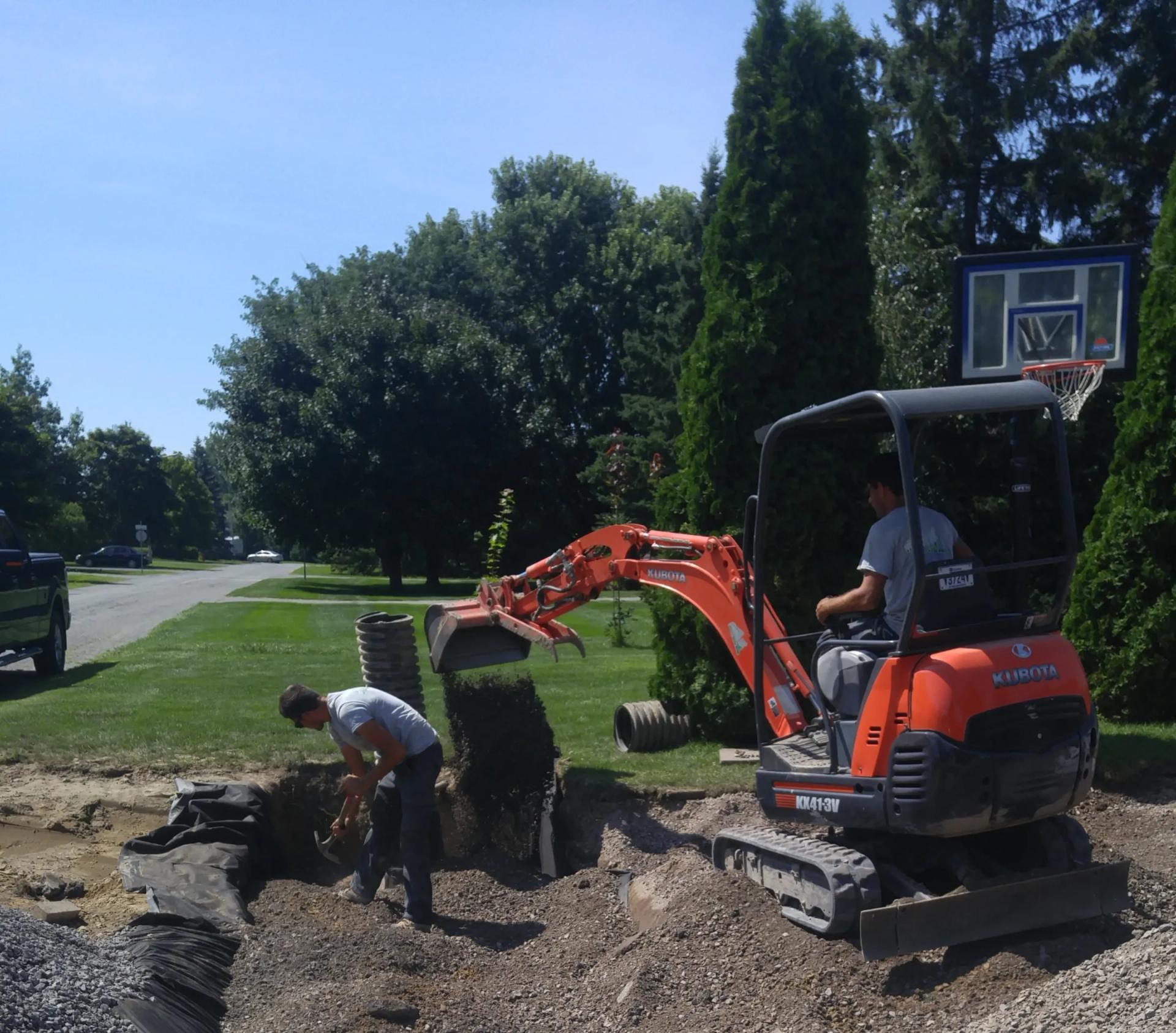
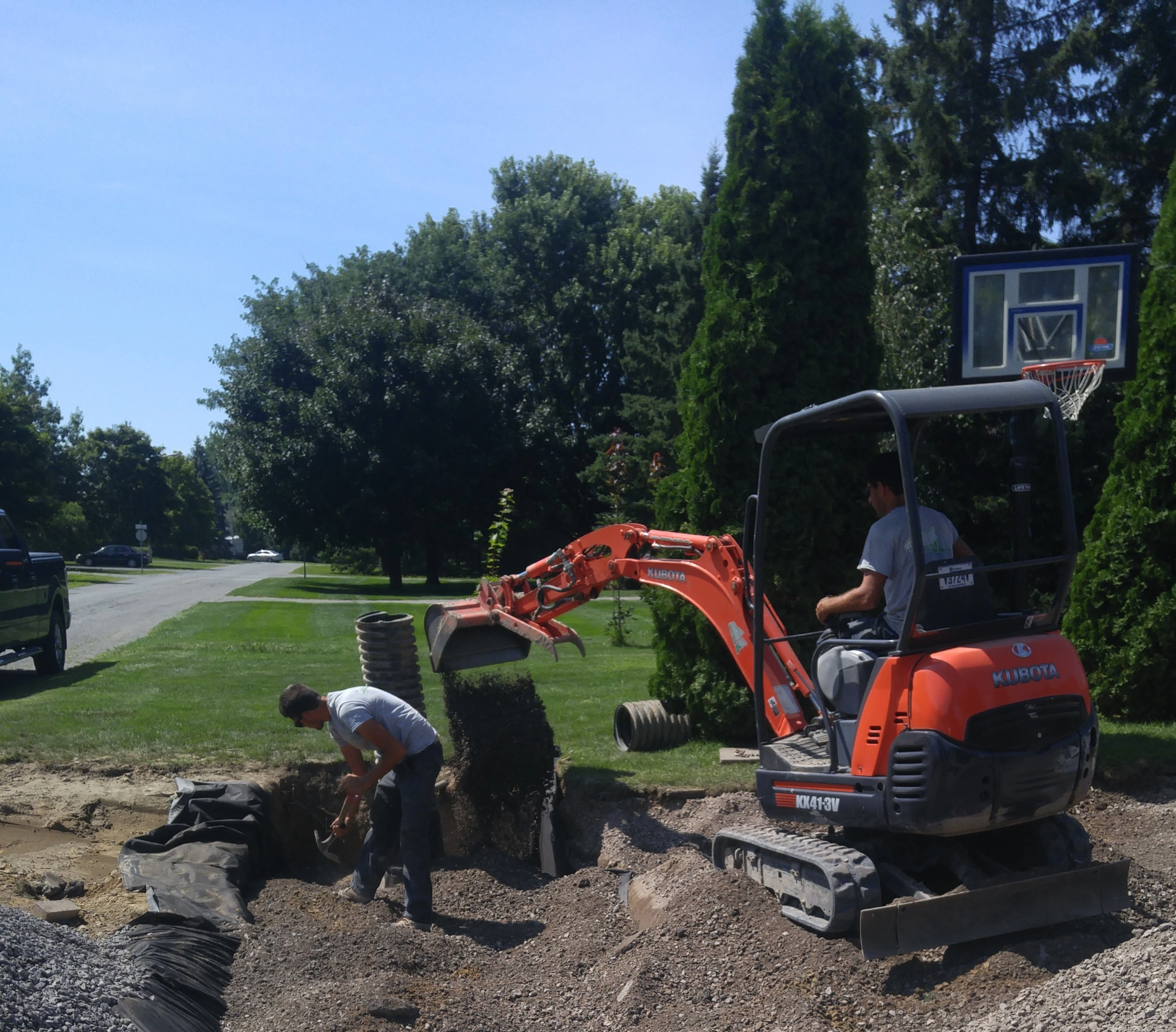
It's the question almost everyone forgets when starting a project. Well-planned earthworks first balance cut and fill directly on site when possible — reducing truck trips and cost — and plan for hauling away the surplus when that's not possible. We assess the volume of soil to move right at the estimate visit, not once the excavator has already arrived on site.

Services available in this area

Solutions tailored to your area

New-lot levelling

For new residential construction: correcting mounds and grade differences left by the general contractor, levelling before landscaping or driveway work.

Existing-lot regrading

Correcting a problem slope after demolition, or to direct water away from the foundation, without redoing everything from scratch.

Excess-soil management

Balancing cut and fill on site when possible, planned hauling of the surplus when it is not.

Sub-base preparation

Excavation and compaction to receive interlock paving, a retaining wall or a patio — the base that determines how long what sits on it lasts.

Slope correction & surface drainage

Redirecting surface water away from the house through proper grading, paired with underground drainage where needed.

Mini-excavation

Targeted excavation for wall foundations, in-ground pools or soil relocation, with equipment suited to residential access.

Why choose us

New-lot or existing-lot diagnosis

We first identify which situation you're in — the two aren't handled the same way — before proposing a work plan.

Cut/fill balance first

We look to reuse soil on site before defaulting to billing hauling trucks.

Built into the quote, not a surprise

Earthworks is priced into the overall quote at the estimate stage, not added mid-project once the excavator has arrived.

The base for everything else

Well-done earthworks means paving, a wall and plantings that stay put — the work you never see protects the work you do.

FAQ for earthworks & grading

What is the difference between new-lot levelling and existing-lot regrading?

New-lot levelling applies to recent residential construction where the soil is left raw by the general contractor: mounds need correcting and the site needs levelling before landscaping. Existing-lot regrading comes after a demolition, or to correct a slope that directs water toward the house instead of away from it. Both require a different assessment and a work plan tailored to the site's actual condition.
Where does the excess soil go during earthworks?

It's a question often forgotten when planning a project. Well-planned earthworks first balance cut and fill directly on site, reducing truck trips and cost. When that isn't possible — too much volume, poor soil quality — we plan the surplus haul-away at the estimate stage, not mid-project.

Is earthworks included in a landscaping quote?

Almost always, yes — it's the first step of durable landscaping, even if the client doesn't "see" it in the final result. Excavating, levelling and shaping the right slopes determines how well the paving, patio, wall or plantings that follow will hold up. We build it into the overall quote rather than billing it as a mid-project surprise.

How long does earthworks take?

For a simple slope correction or sub-base prep, expect a few days. For full levelling of a large new lot, or regrading involving a significant volume of excess soil to haul away, plan for one to two weeks. We give a precise schedule after assessing the volume of soil to move on your site.

Can grading fix water pooling near the house?

Often, yes. A misdirected slope that sends water toward the foundation is corrected through surface regrading that recreates a proper drainage slope. In more complex cases (clay soil, flat lot, large water volume), we complement grading with underground drainage — a French drain or soakaway pit. We assess both options together during the site visit.

A new lot left raw, or an existing slope sending water to the wrong place, in Saint-Joseph-du-Lac, Deux-Montagnes, Oka, Saint-Eustache, Mirabel or Pointe-Calumet? We assess the volume of soil to move and quote a free detailed estimate.

See also: Retaining walls · Drainage · Our services