A natural stone staircase to link the levels of your property
On a sloped or multi-level lot, the staircase is what connects the zones: from the driveway to the door, from the terrace to the yard, from the top of a wall to the bottom of the bank. Outdoor stone staircases are part of our stone wall work: monolithic steps and landings built into the wall, linking the levels of the property in visual continuity.
Monolithic steps
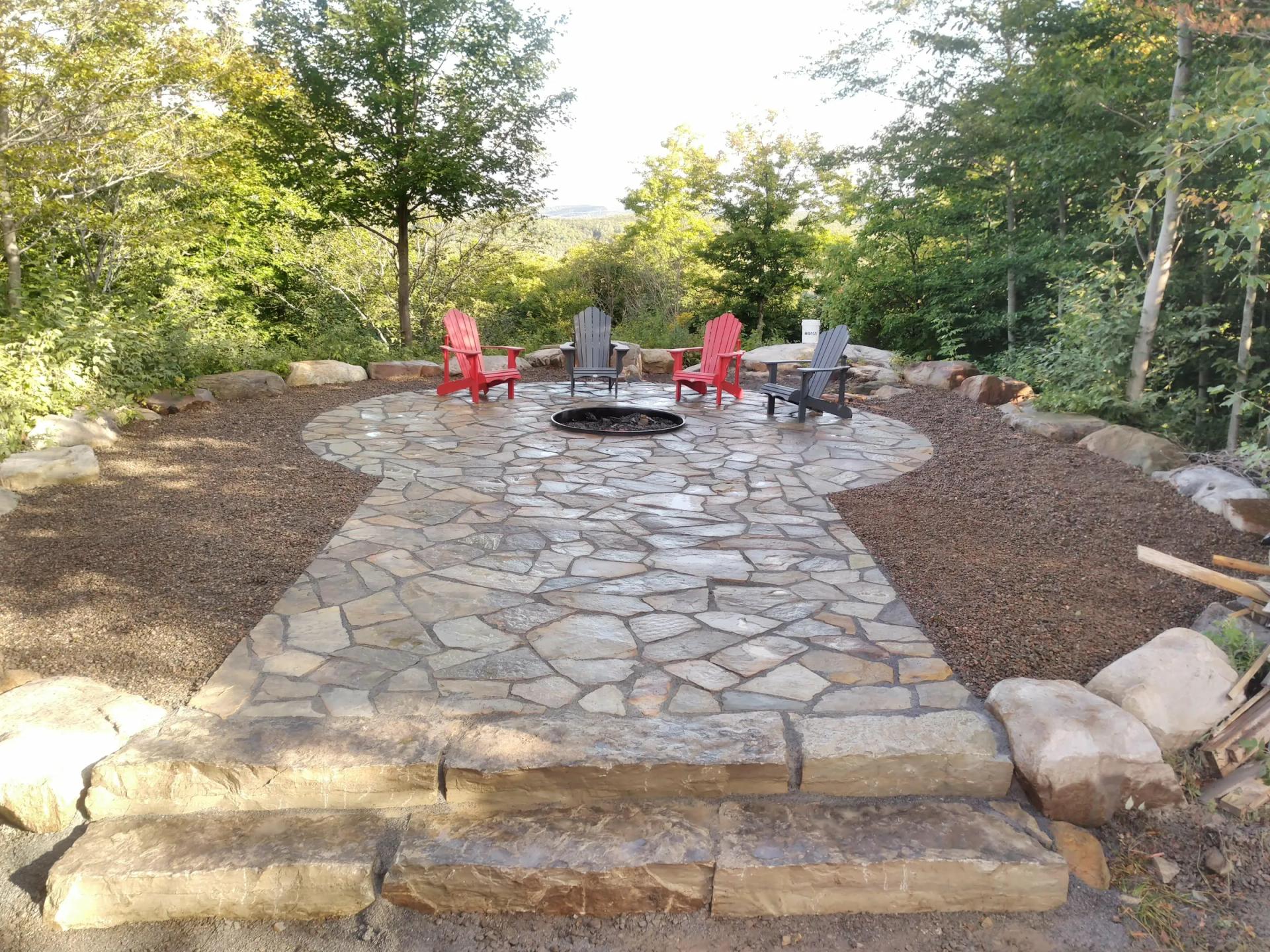
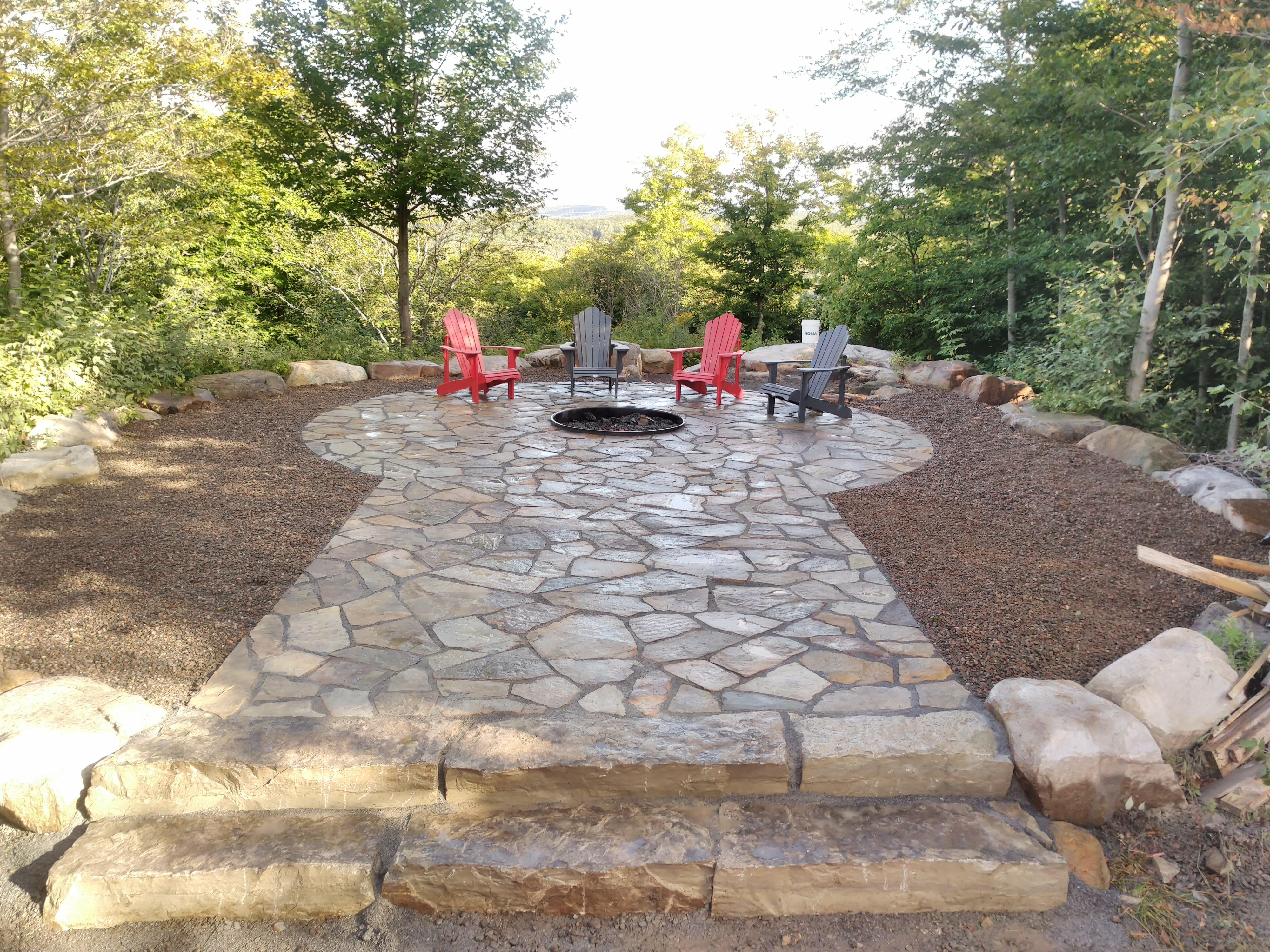
A monolithic step is a whole block of granite or limestone, 1 to 2.5 metres long, laid without visible joints. For every natural stone project we pick the blocks at the quarry, and you approve the key pieces, steps included, on photos before cutting.
Landings built into the wall
When the lot calls for a wall, the staircase can be built into it: the wall is designed together with the steps, the lighting and the paving, as one coherent whole rather than an isolated wall. Our stone walls page describes the foundation and drainage we plan for a wall, and the retaining walls page explains the structure when the wall holds back soil.
Which stone for steps
Saint-Marc limestone, a grey stone, is often chosen for steps, retaining walls and edging. Canadian Shield granite is the choice for maximum durability. Fieldstone, irregular and rustic, suits access steps that should blend into the natural setting. Slate is used for the technical steps of chalets on a slope. To compare, see our guide to choosing the stone and the fieldstone page.
Where we build them
At the front of the house, natural stone steps or landings give the front door an approach with character: see front yard landscaping. Up to a terrace, monolithic steps lead to the level of the slabs: see the natural stone terrace page. On sloped chalet lots, stone staircases follow the natural relief, as in Mont-Tremblant. The overview of the stones we lay is on our natural stone page.
What we look at during the visit
We assess the property, your needs and the budget, then give you a written quote. To prepare for the visit, a few points help: where the staircase has to lead and where it starts, whether it should join a wall or a terrace, the stone you prefer and whether the area stays exposed to water. The natural texture of stone is generally non-slip, but that depends on the stone chosen and its finish: we talk it through when choosing, especially for steps. We also check your municipality's bylaw before work begins.
What a stone staircase costs
Cost depends on the stone chosen, the foundation and drainage required, site access and finishes. Rather than a generic figure, we price your exact project during a free on-site estimate.