What is fieldstone?
Raw stone gathered directly from Québec fields. Every piece is unique, in tones of ochre, grey and brown. We mostly use it for rustic walls, stepping stones and chalet landscaping.
In brief
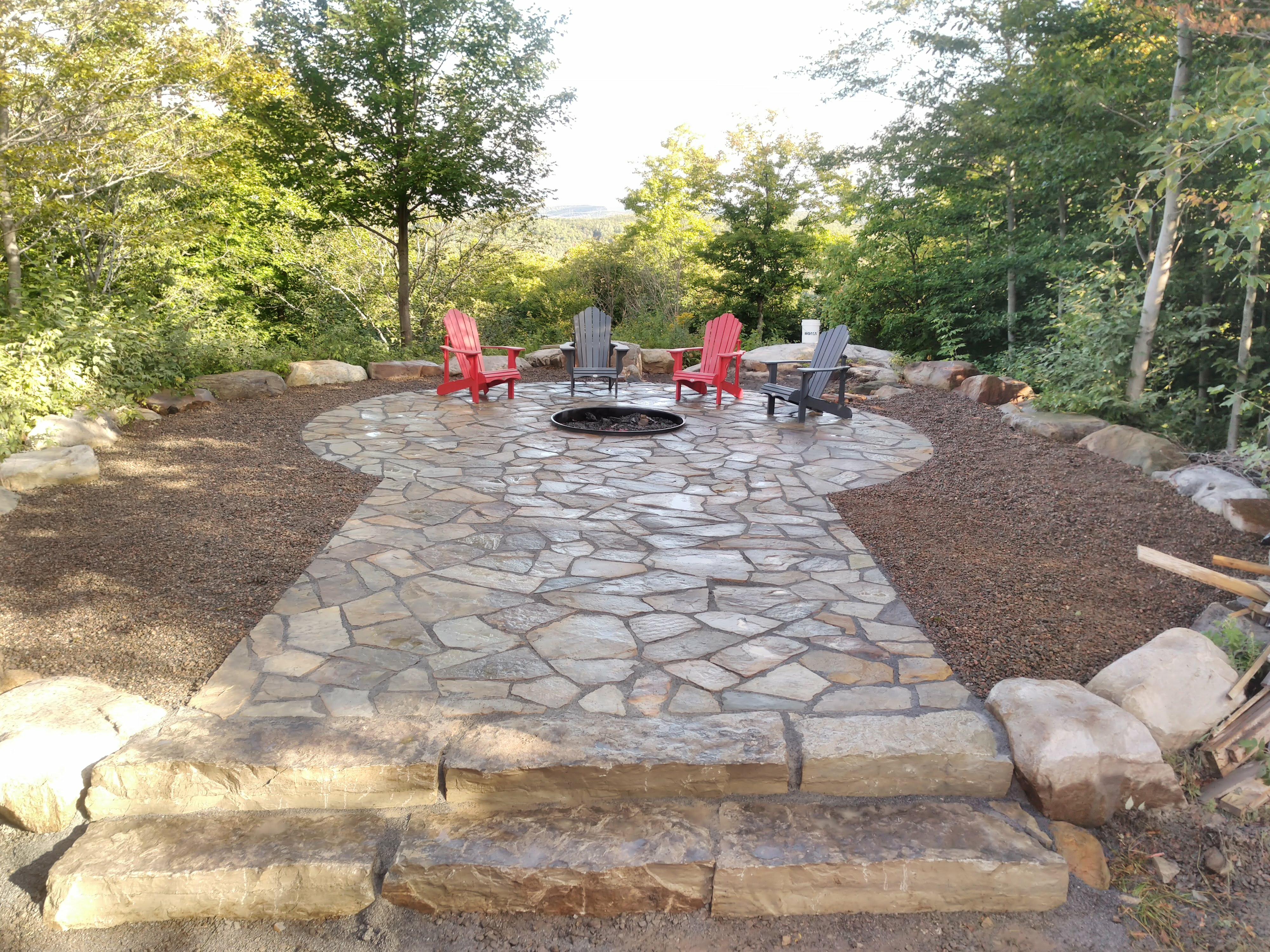
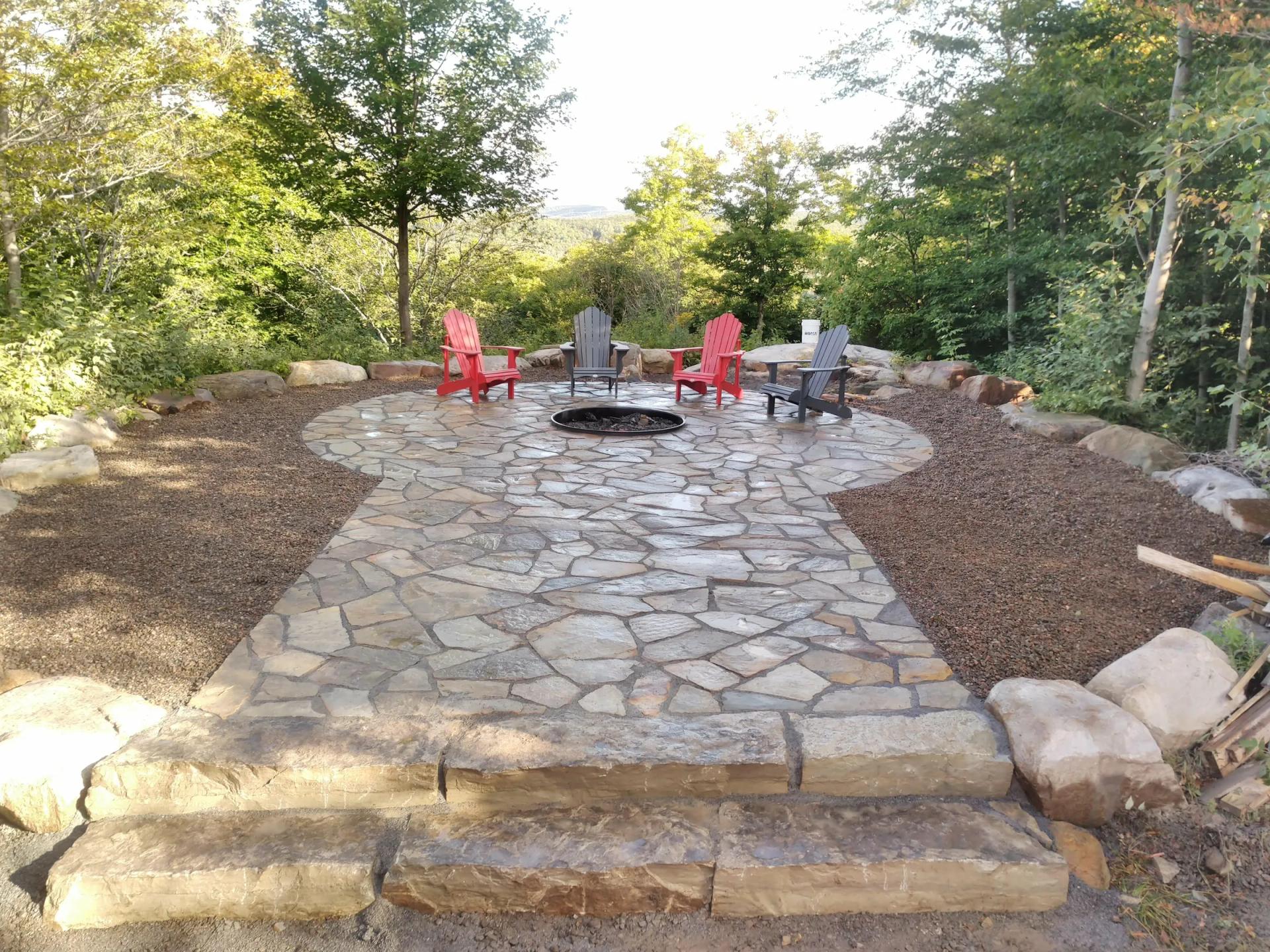
Fieldstone (pierre des champs in French) is raw stone gathered directly from Québec fields. Each piece keeps its original shape, surface and colour: ochre, grey or brown depending on where it comes from. That gives it a rustic character a manufactured product can't match exactly. It is one of the stones we lay, alongside the others presented on our natural stone page.
It is mostly chosen for rustic walls, stepping stones and paths, or for landscaping that should blend into the surroundings, such as around a chalet in the Laurentians. If your project is a wall, our stone walls page explains how it is built, and our guide to choosing stone for a wall compares it with limestone, granite and sandstone. For a continuous surface such as a terrace or paved area, see natural stone terraces for the options.
Because no two pieces are alike, the work can't be mechanized: pieces are fitted one by one, by hand, rather than following a repeating pattern. The stone is heavy, so the base matters as much as what you see: a reinforced sub-base of crushed stone compacted in layers, and drainage behind the wall for a retaining wall. For stepping stones and paths, the crushed-stone base keeps the pieces from sinking.
Fieldstone is rustic and irregular. That is its appeal, but it isn't the right pick if you want clean lines and uniform sizes. In that case other natural stones, interlock paving or precast block will suit better, and we'll say so plainly at the estimate.
Raw stone laid dry-stacked or mortared for a wall with rustic character. Compacted foundation and drainage behind the wall whenever it holds back soil.
Pieces placed by hand and spaced to a natural stride, on a crushed-stone base to prevent sinking. Handy for crossing the yard or reaching a shed.
Stone worked into Laurentians properties: walls, access steps and paths that sit comfortably in the natural setting.
Fieldstone pairs well with other natural stones or with interlock paving, for example a rustic wall beside a driveway or terrace.
Shapes, colours and surfaces vary from piece to piece: the result will never match a catalogue photo exactly, and that is the charm.
If you want clean lines, uniform sizes or a match with paving, other materials fit better. We lay out the options with their pros and cons.
Natural stone laying doesn't mechanize like interlock paving. Our own team does the work directly, piece by piece.
Every wall, terrace or fireplace in natural stone laid by our team carries a 5-year workmanship warranty, with a free annual inspection in year one.
Raw stone gathered directly from Québec fields. Every piece is unique, in tones of ochre, grey and brown. We mostly use it for rustic walls, stepping stones and chalet landscaping.
It depends on the look you want. Fieldstone is irregular and rustic, with warm tones. Saint-Marc limestone is a grey stone with a natural or split surface, often chosen for retaining walls, steps and edging. We advise based on style, the wall's role and budget.
Yes, provided the installation is careful. Local fieldstone tolerates repeated freeze-thaw cycles as long as it sits on a drained sub-base that keeps it from moving. The base and drainage, more than the stone itself, decide how well a wall holds.
Fieldstone is mostly used for walls, stepping stones and paths. For a continuous surface like a terrace, other natural stones are usually compared; we settle it at the estimate, based on use and the style you want.
Cost depends on the height and length of a wall or the surface to cover, the stone chosen, the foundation and drainage required, and site access. Rather than a generic price, we quote your exact project during a free on-site estimate.