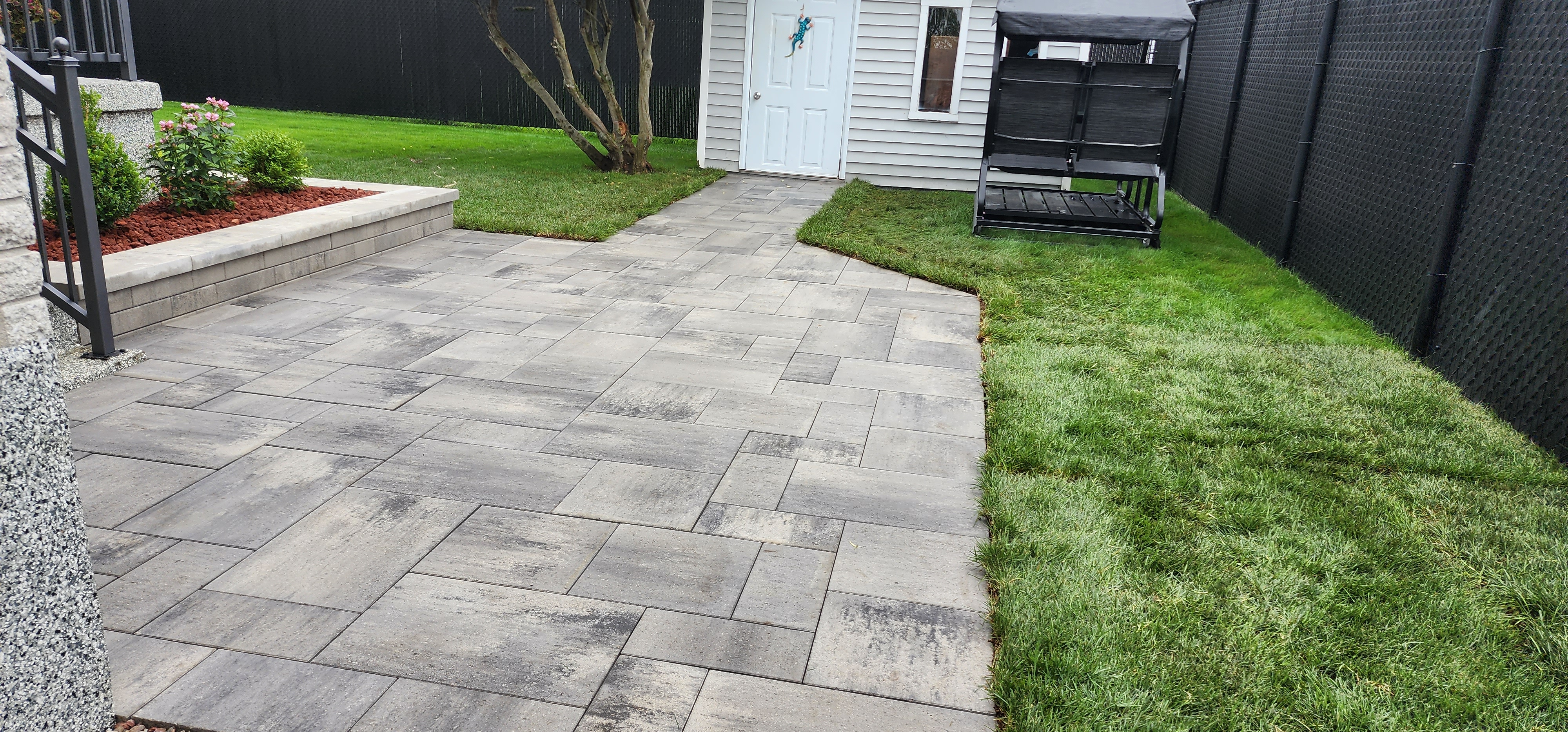
Interlock driveway and walkway built by Les Aménagements Spectaculaire
Guide: care

Interlock Paver Care: Cleaning, Joints and Polymeric Sand

What to do in spring, through the season and in winter to keep interlock pavers in good shape: sweeping, joints, polymeric sand, snow removal and de-icing.

In brief

  • The short answer: In spring, sweep off the residue, check the joints and top them up with polymeric sand if needed. In winter, shovel with a plastic or rubber shovel. Every 5 to 7 years, plan a preventive joint re-bonding.
  • De-icer: Calcium chloride or abrasives (sand, fine stone), not road salt.
  • On delivery: When a job is delivered, we hand over a personalised care guide.

Caring for interlock pavers, season by season

Well-installed interlock asks for little, but those few steps come back every year. Pavers laid on a proper sub-base last 30 to 50 years in the Laurentians climate, and a driveway that carries vehicles wears faster than a walkway. Here is what we advise, in the order of the year.

In spring: sweep, check the joints, top up the sand

Once the snow has melted, sweep off the residue left by winter. Then go over the joints: if they have emptied out, top them up with polymeric sand. Well-filled joints cut down on weeds.

Seasonal cleaning

Seasonal cleaning is one of the basic upkeep tasks we ask for to keep the warranty on pavers we have installed. In practice, you sweep off leaves, soil and debris, then rinse. If you use a pressure washer, keep it at a good distance: a jet that is too strong or too close can knock the sand out of the joints, so check them after cleaning.

Winter: plastic shovel, rubber blade, calcium

To clear snow, use a plastic or rubber shovel, never a metal one, which scratches the pavers. If you hire a snow-removal contractor, insist on a rubber-edged blade. To de-ice, pick calcium chloride or abrasives such as sand or fine stone rather than traditional road salt (NaCl), which degrades pavers and harms nearby plants. Avoid coloured chemical products too.

Polymeric sand and joints: when to step in

Polymeric sand is the joint sand for pavers: it fills the spaces between them. Top it up in spring as needed, and plan a preventive joint re-bonding every 5 to 7 years: it strengthens the joints and cuts down on weeds. It is one of the basic upkeep tasks tied to the warranty on our jobs.

When the problem isn't upkeep

Puddles between the joints, pavers that sink or ground that moves often point to water and ground preparation, not to missed sweeping. Our drainage page describes these signs. With interlock, a damaged section can often be lifted out and replaced without redoing the whole surface, provided the original paver is still available or a compatible pattern is chosen.

Sealing, re-sanding and repairs

On our own projects, we offer interlock sealing and spot repairs: cleaning, re-sanding with polymeric sand and a protective sealer, plus lifting and re-levelling pavers that have sunk, warped or come loose. The details are on our interlock paving page; for all our work, see the North Shore landscaper page.

The calendar

Care in four steps

In spring

Sweep off the winter residue, check the joints and top up with polymeric sand if needed.

Through the season

Seasonal cleaning: sweep leaves and debris, rinse, then check the joints again.

In winter

Plastic or rubber shovel, rubber-edged blade for the snow contractor, calcium chloride or abrasives to de-ice.

Every 5 to 7 years

Preventive joint re-bonding: it strengthens the joints and cuts down on weeds.

Four mistakes to avoid

The metal shovel

It scratches the pavers. A plastic or rubber shovel does the same job without damaging them.

Road salt

Traditional salt (NaCl) degrades pavers and harms nearby plants. Prefer calcium chloride or abrasives.

Coloured products

Avoid coloured chemical products for de-icing.

A snow-removal contractor without a rubber blade

If you hire a snow-removal contractor, insist on a rubber-edged blade to protect the surface.

Interlock paver care: frequently asked questions

How do I clean interlock pavers?

Sweep leaves, soil and debris regularly, then rinse. Keep a pressure washer at a good distance and check the joints afterwards: a jet that is too strong or too close can knock the sand out. Seasonal cleaning is one of the basic upkeep tasks we ask for to keep the warranty.

When should I top up the joint sand?

In spring, after checking the joints, and only if needed, with polymeric sand. A preventive joint re-bonding every 5 to 7 years strengthens them.

What is polymeric sand?

It is the joint sand for pavers: it fills the spaces between them. Well-filled joints cut down on weeds.

Which de-icer is safe for interlock?

Calcium chloride or abrasives (sand, fine stone). Avoid road salt (NaCl) and coloured chemical products. For snow, use a plastic or rubber shovel, or a rubber-edged blade.

Do you offer interlock cleaning?

On our own projects, yes: we offer interlock sealing and spot repairs, meaning cleaning, re-sanding with polymeric sand and a protective sealer, plus lifting and re-levelling pavers that have sunk, warped or come loose. When a job is delivered, we also hand over a personalised care guide.

A new interlock driveway to install, or a surface to redo? We come and look at the site and give you a detailed written quote, free of charge.

See also: Interlock paving · Drainage · FAQ · Front yard landscaping